
Where ontology meets grammar and cognition.
OASIS 5 is the fifth meeting of Ontology As Structured by the Interfaces with Semantics.



Invited speakers
OASIS is an umbrella organization for research about and around formal semantic ontology
Check out the main OASIS pageGallery
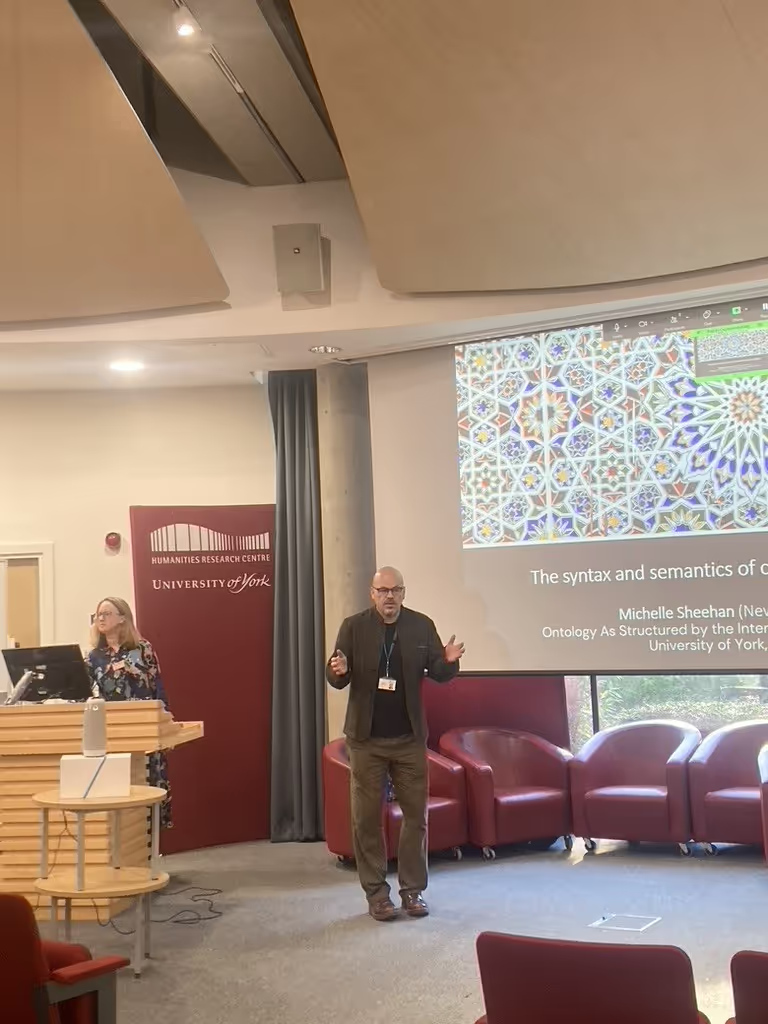
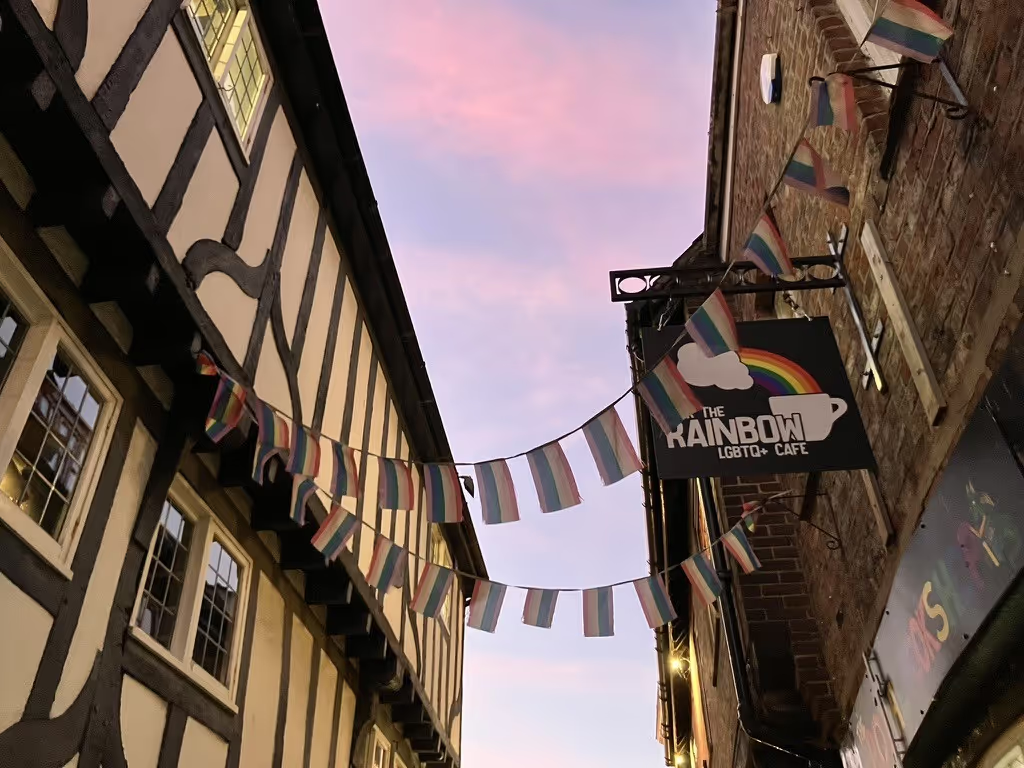
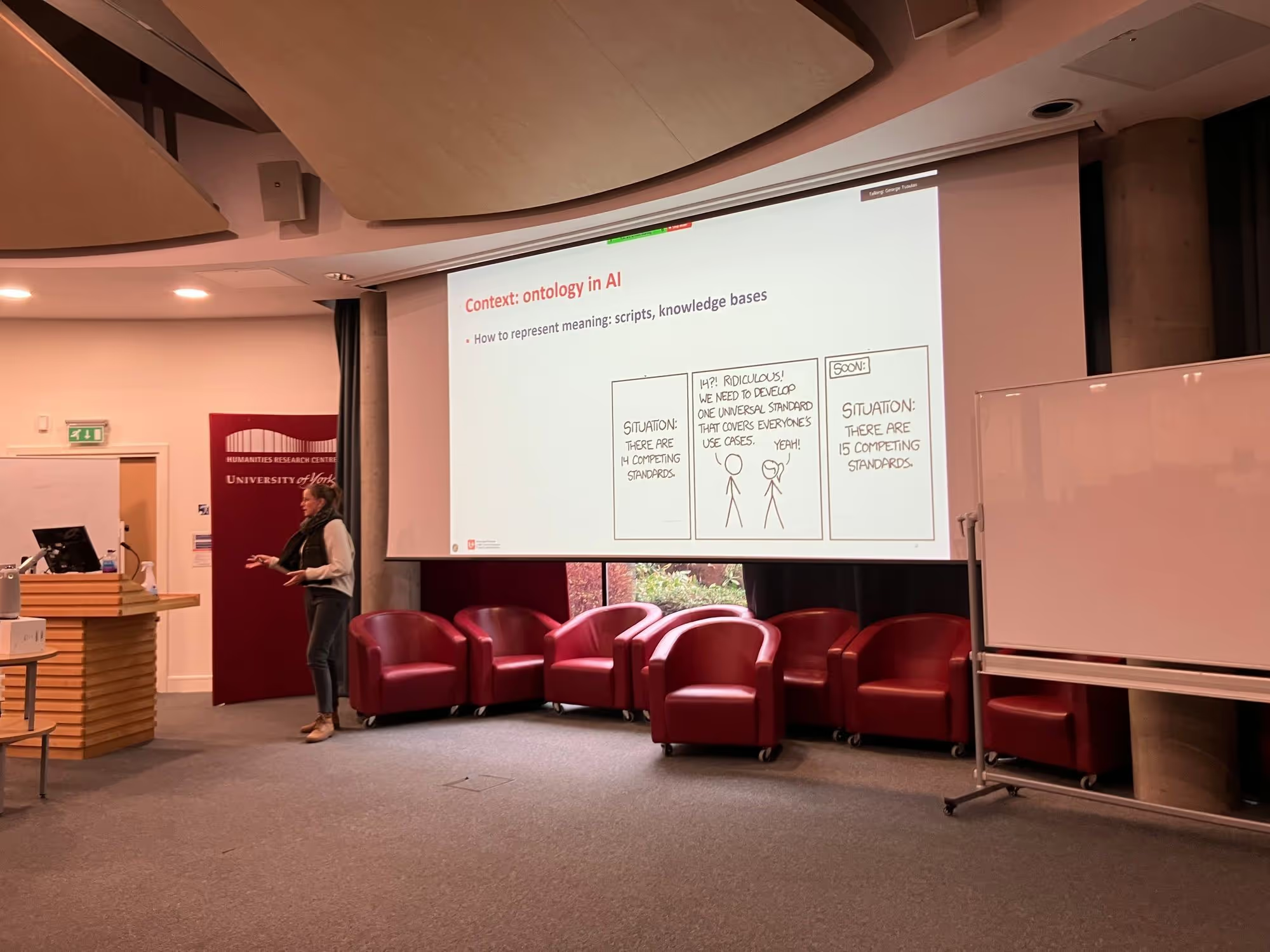
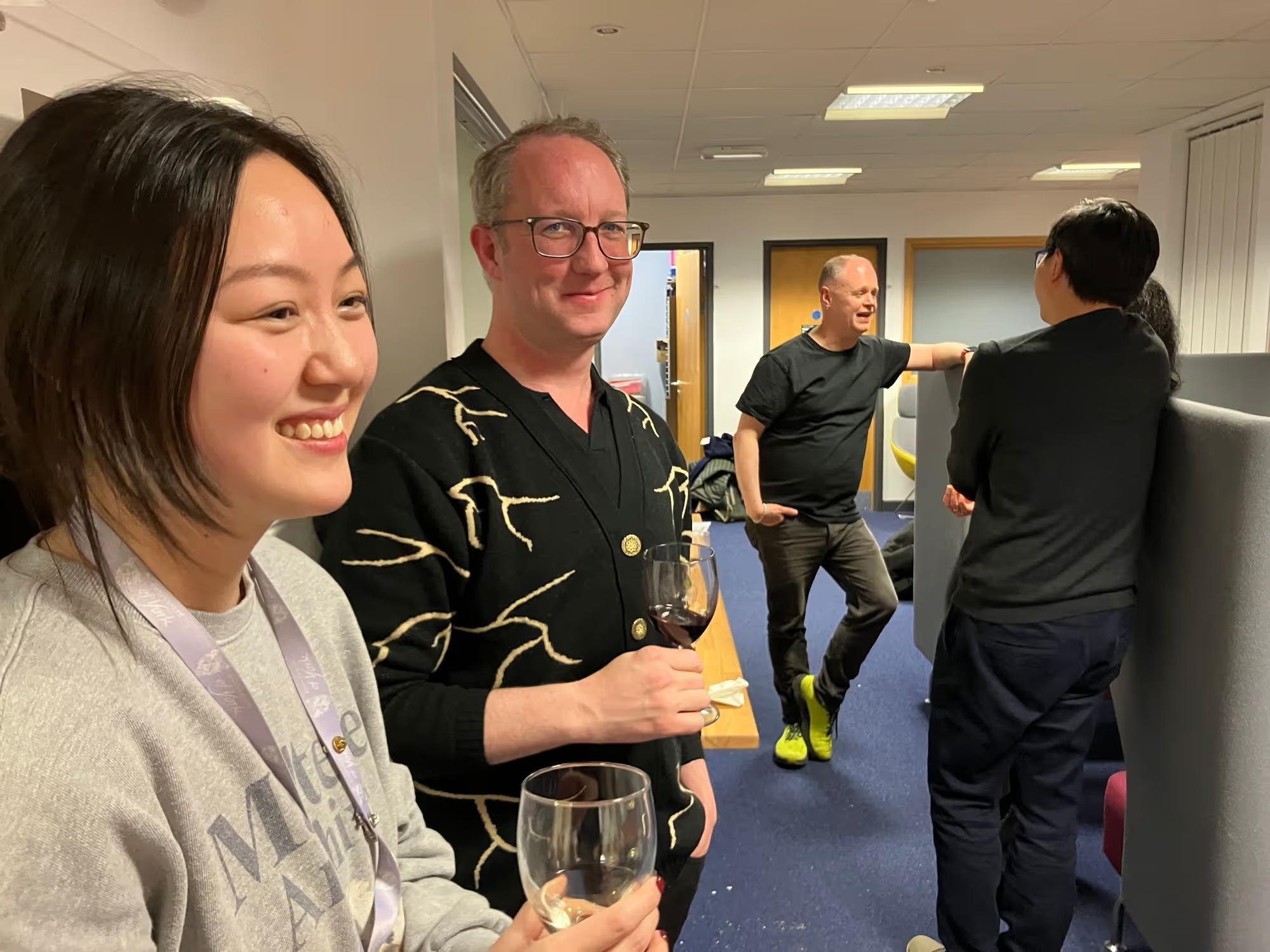
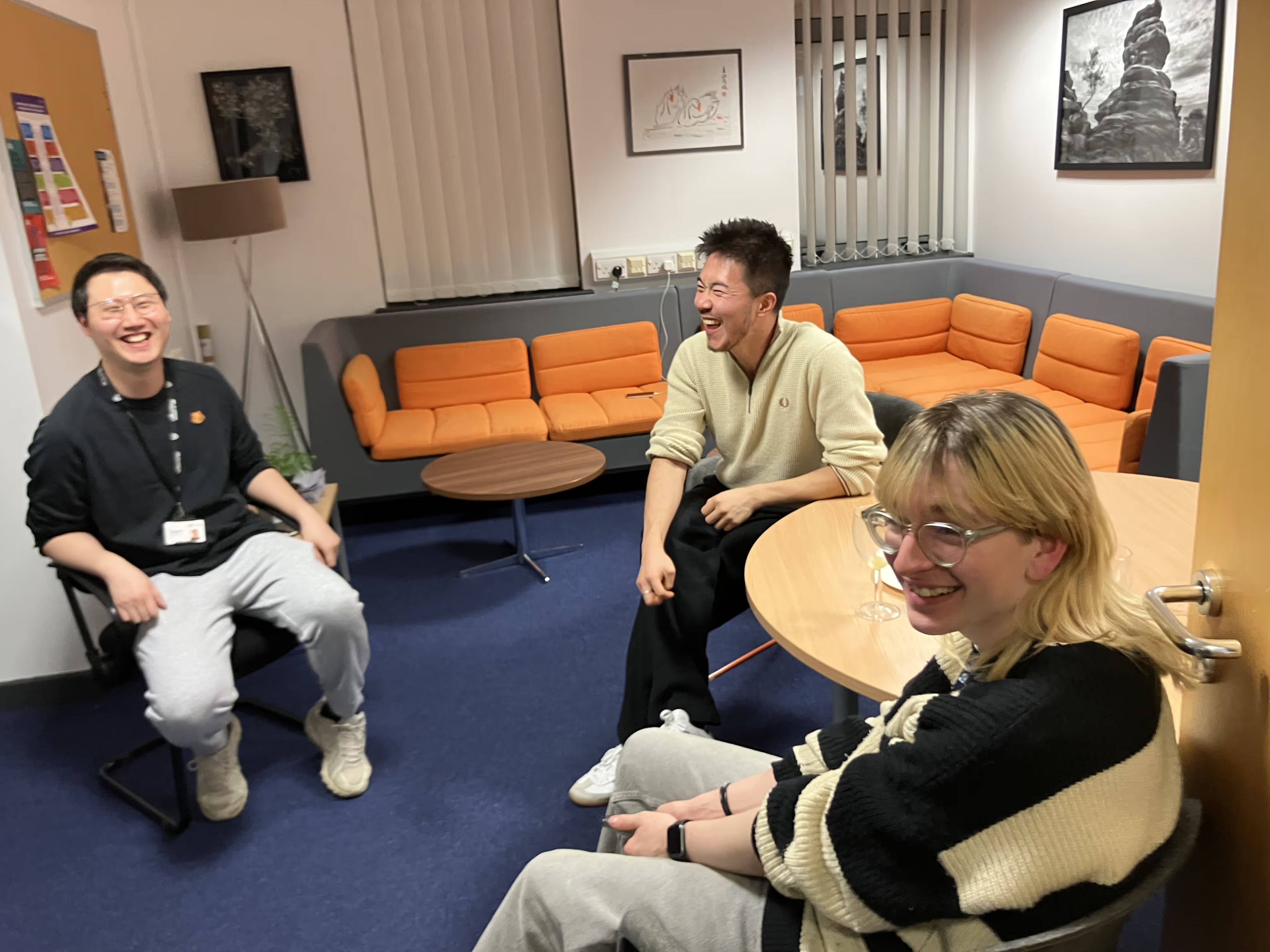
Photos from the previous OASIS meeting




Organizers
Bridget Copley (OASIS)
SFL (CNRS/Paris 8)
Rob Truswell (local chair)
University of Edinburgh
Esther Lam
University of Edinburgh
Dan Lassiter
University of Edinburgh
Wataru Uegaki
University of Edinburgh
Itamar Kastner
University of Edinburgh
Caroline Heycock
University of Edinburgh
Sponsors


Call for papers
OASIS 5 (Ontology As Structured by the Interfaces with Semantics 5) will take place at the University of Edinburgh in the UK, December 3-5, 2025.
The OASIS conference series aims to promote conversation across different disciplines that interface with semantics, using ontological questions as shared reference points. The broad questions in the background are these:
- What basic ontological building blocks do we use to talk and think about the world?
- How do these building blocks get combined?
- How do grammatical and cognitive phenomena motivate the answers to the first two questions?
For more information, see the OASIS credo.
Invited speakers
Fabienne Martin, Universiteit Utrecht
Tadeg Quillien, University of Edinburgh
Roberto Zamparelli, Università di Trento
Satellite session: Nominals in non-referential use (December 3)
In this session we are looking to explore the syntax and semantics of nominal projections, particularly in non-referential and/or non-argumental uses. First, there is the question of ontology. How rich a semantic ontology do we need to capture the various meanings of nominal expressions that have been categorized as non-referential in some sense? Do we need individual concepts, properties, kinds, tropes, etc ? How should we best analyse the attributive use of nominals? Do all weak definites refer? Second, and relatedly, do we have good diagnostics for distinguishing between these different types of meaning? To take one example, there is disagreement over whether the subject of a copular clause like "The best candidate is Hannah" denotes a property or an individual concept. Arregi et al. 2021 give empirical arguments for the latter, but it is not clear whether these would allow a similar question to be answered concerning the status of the same nominal if the sentence is reversed ("Hannah is the best candidate"). In such an example, is "the best candidate" ambiguous between denoting a property and an individual concept? How could we decide? Third, what is the mapping between the syntax and the semantics? Does our semantic ontology map in a predictable way onto different projections within nominal phrases (and vice versa)? What is the internal structure of nominals as predicates, individual concepts, concealed questions, V-N light verb constructions, etc? Is there a relation between the syntax of definite predicates and weak definites in other uses?
We welcome submissions on any of these topics for the satellite workshop; we are particularly interested in work that explores these questions in lesser-studied languages.
Arregi, K., Francez, I. and Martinović, M., 2021. Three arguments for an individual concept analysis of specificational sentences. Natural Language & Linguistic Theory, 39, pp.687-708.
Abstract submission
Abstracts are due on August 15, 2025. Submission will be via the conference OpenReview page.
If you are submitting for the satellite workshop, please indicate this by including “[for satellite workshop]” under the title of your abstract.
Abstracts must be anonymous, in pdf format, 2 A4 pages, in a font size no less than 12pt. You may submit at most two abstracts but can be single author on only one.
Linguists and others submitting very technical research: It is absolutely necessary that you do what you can to make your abstract accessible to an interdisciplinary audience. This doesn't mean eschewing all formalism, but do pitch your abstract so that a non-technical reader can get something interesting out of it.
Important dates
- August 15, 2025: Abstract deadline
- September 15, 2025: Notification
- December 3, 2025: Satellite session
- December 3-5, 2025: Main conference
Website
https://oasis.cnrs.fr/meetings/oasis-5
Contact
Invited speakers
Program
This event consists of two one-hour sessions bringing together linguists and philosophers to discuss foundational questions in linguistics and their relation to broader philosophical issues. The sessions will introduce some of the central assumptions and frameworks of contemporary linguistic theory and provide informal opportunities for interdisciplinary exchange.
Practicalities
Location

Registration
About OASIS
What is OASIS
OASIS, Ontology As Structured by the Interfaces with Semantics, is an umbrella organization for research about and around formal semantic ontology. It started as an international research network funded by the French Centre National de la Recherche Scientifique from 2017 to 2021, and is continuing as a yearly in-person conference. In addition, our vision is to build a digital infrastructure that will allow the community to interact more online.
How can I be a part of OASIS?
We're working on it! There will be two ways to interact with OASIS: receiving a newsletter tailored to your own particular interests, and being a member. Members will generate the content of the newsletter by posting just a few of their own publications or other items on the OASIS site each year, and will be welcome to have a profile in the People section of the OASIS site.
What we are building is the backend where members can post, as well as an automated (but friendly) system of email reminders to post. You can sign up to be notified when the newsletter and membership system are ready. After they go online, we have other ideas for building online community that we look forward to discussing with OASIS members.
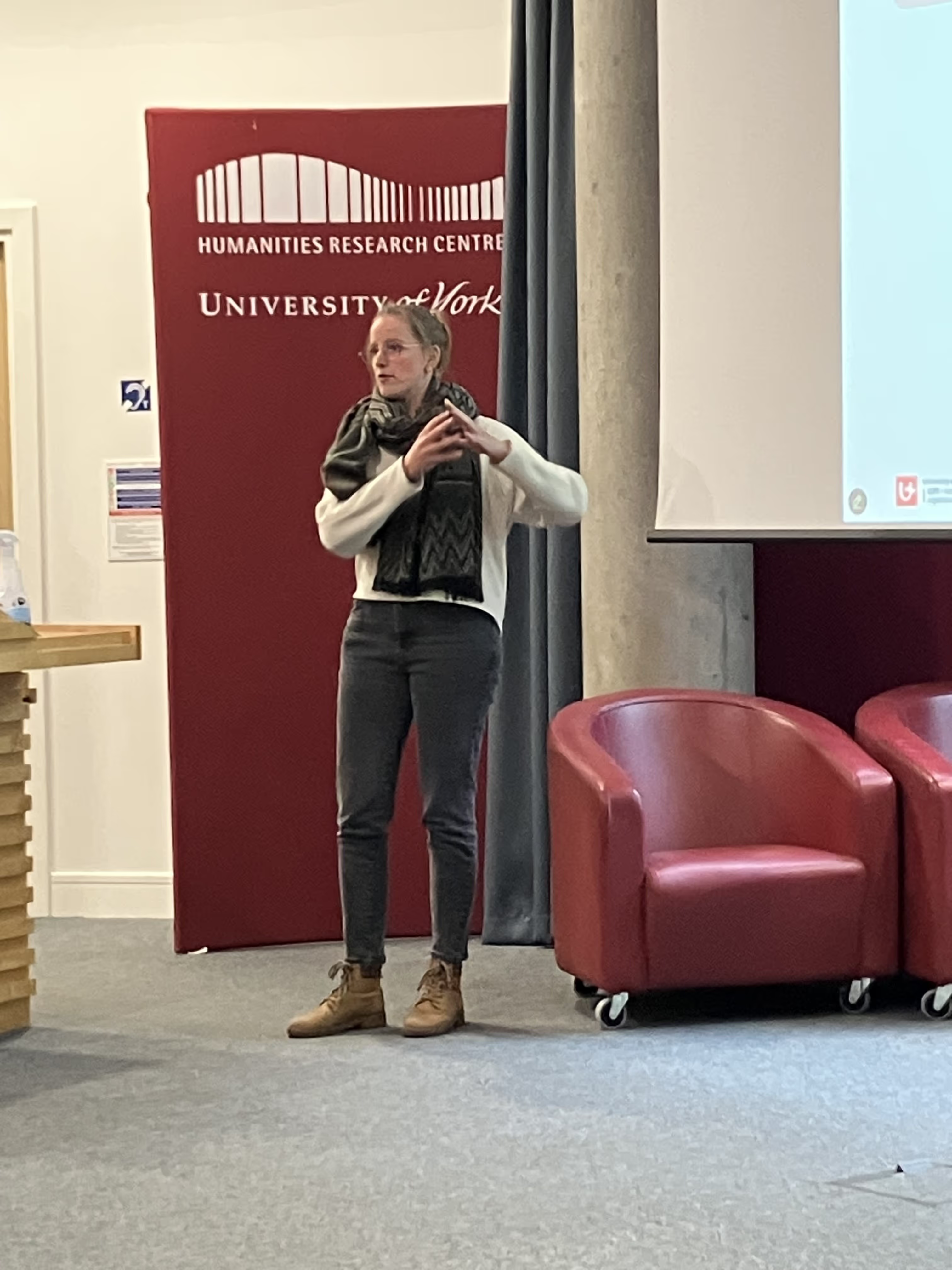
Gallery
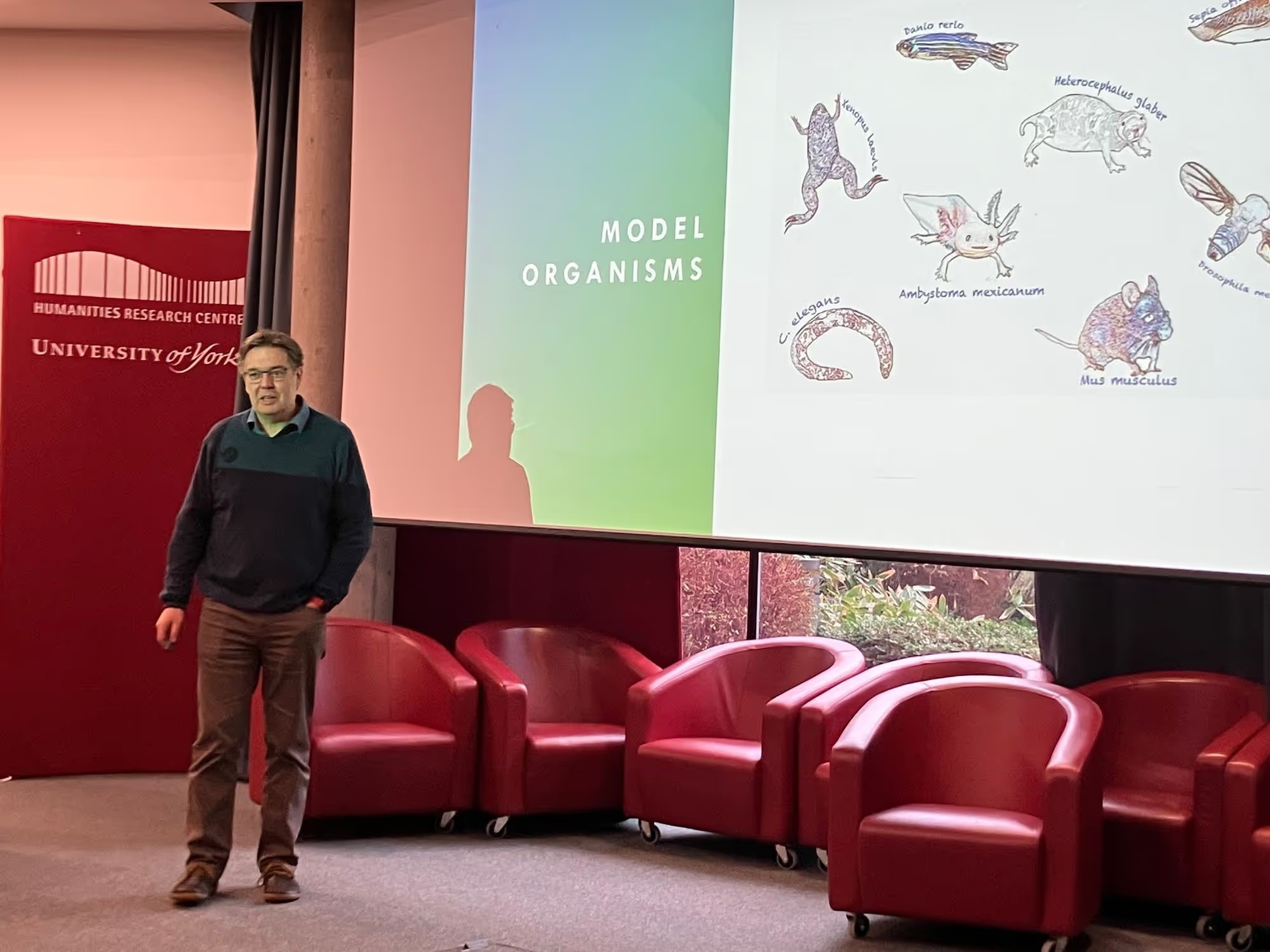
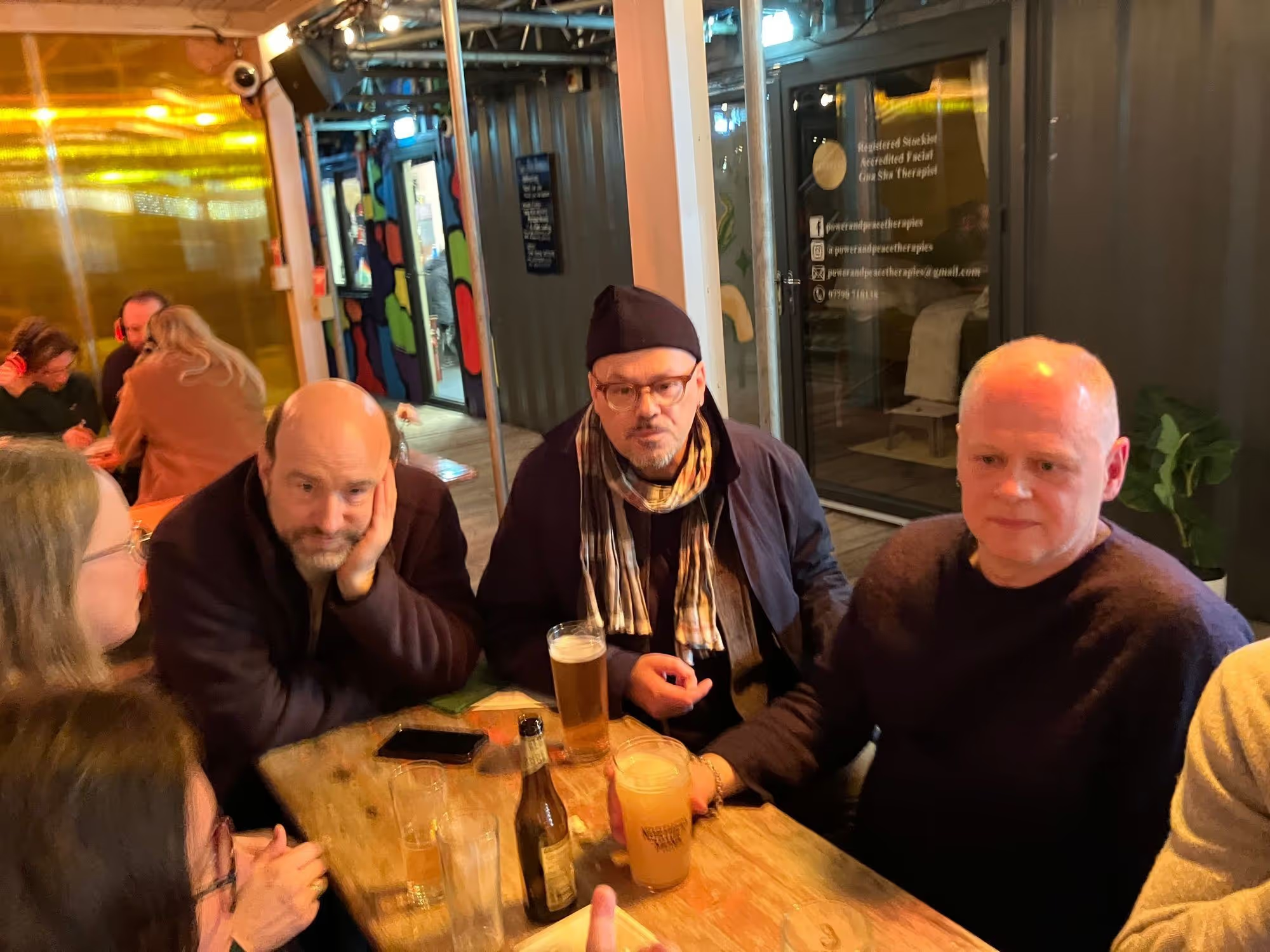
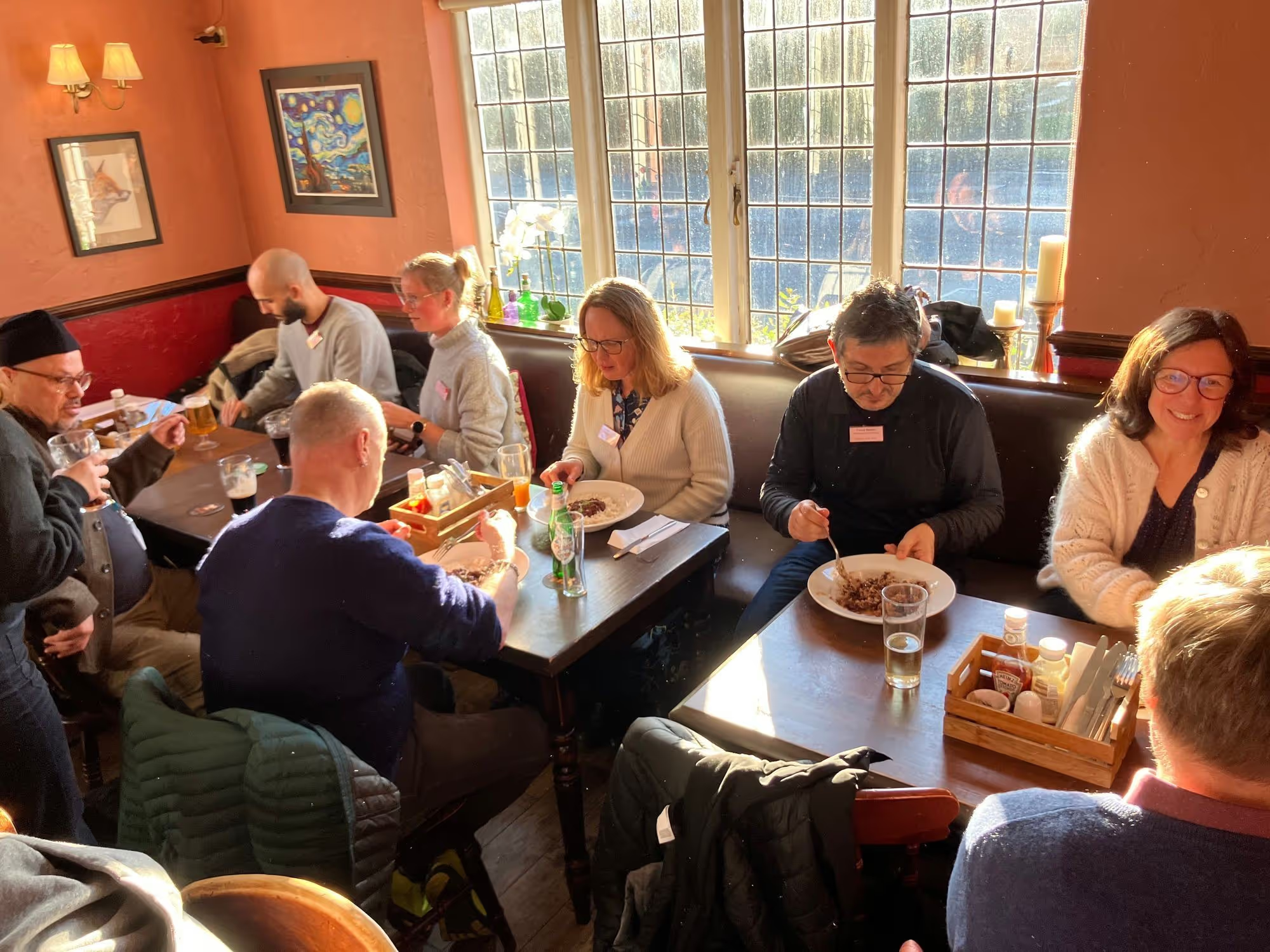
OASIS 4 was held in York, UK in January 2025.

Sponsors

Contact
The OASIS 5 organizers can be contacted at oasis5edinburgh@gmail.com