

Where ontology meets grammar and cognition.
OASIS 4 is the fourth meeting of Ontology As Structured by the Interfaces with Semantics. The call for papers deadline is November 25, 2024. We hope to see you in York!



Invited speakers
OASIS is an umbrella organization for research about and around formal semantic ontology
Check out the main OASIS pageGallery
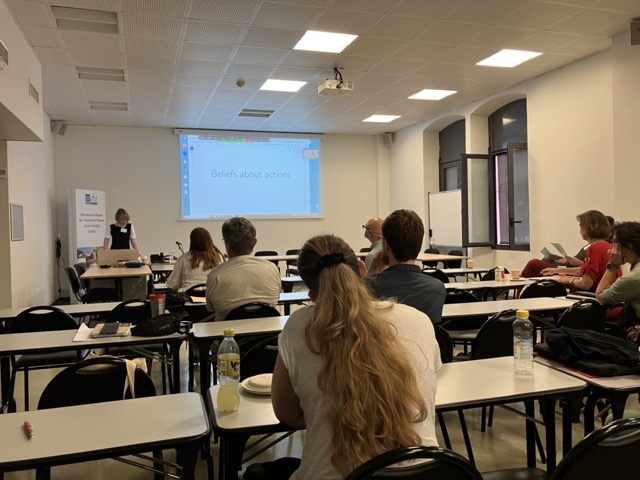
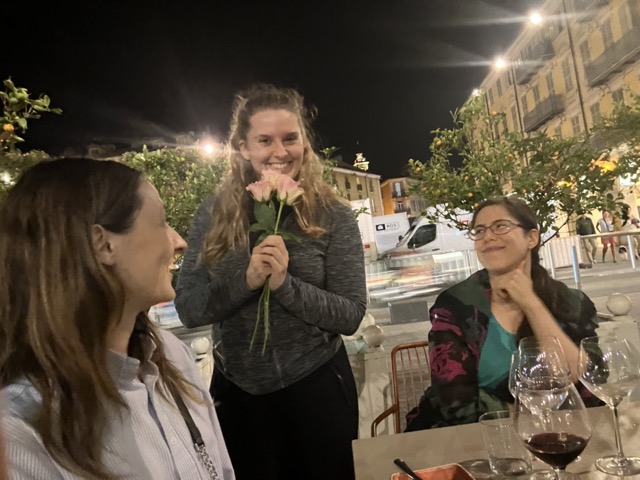
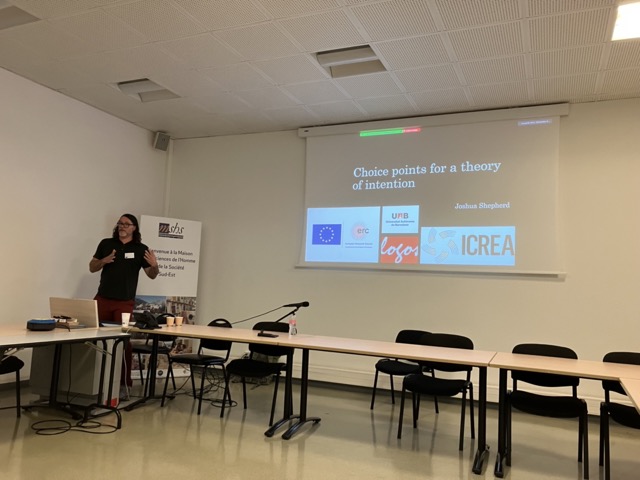
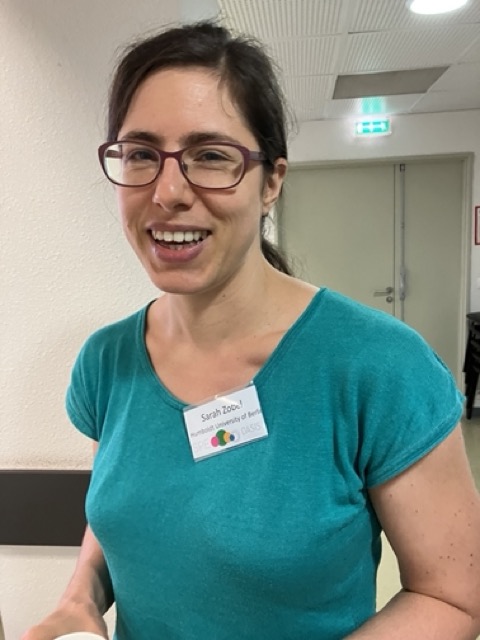
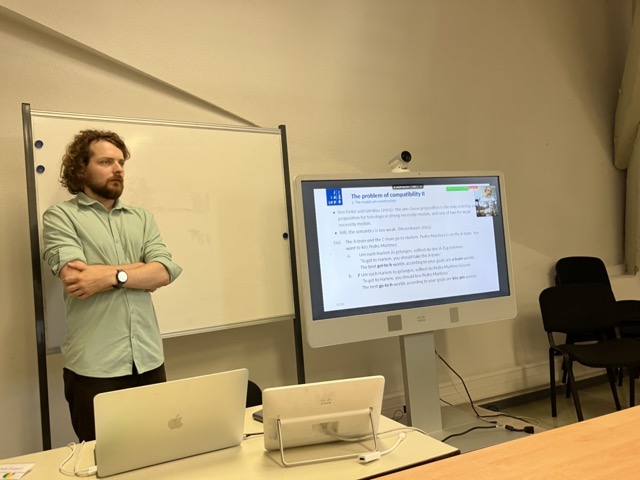
Photos from the previous OASIS meeting



Organizers
Phillip Wolff (invited organizer)
Emory University
George Tsoulas (local chair)
University of York
Bridget Copley (OASIS)
SFL (CNRS/Paris 8)
Sponsors


Call for papers
OASIS 4 (Ontology As Structured by the Interfaces with Semantics 4) will take place at the University of York in the UK, January 15-17, 2025.
The OASIS conference series aims to promote conversation across different disciplines that interface with semantics, using ontological questions as shared reference points. The broad questions in the background are these:
- What basic ontological building blocks do we use to talk and think about the world?
- How do these building blocks get combined?
- How do grammatical and cognitive phenomena motivate the answers to the first two questions?
For more information, see the OASIS credo.
Invited speakers
David Adger, Queen Mary University of London
Michelle Sheehan, Newcastle University
Phillip Wolff, Emory University
Special topic: Large Language Models and ontological tasks
The most advanced large language models (LLMs) sometimes perform well on making inferences about relationships between entities in the world. For example, Bubeck et al. 2023 asked GPT-4 to draw a unicorn using Tikz, a markup language for generating graphics, with some success: it put the visual elements of the unicorn in roughly the right places. On the other hand, LLMs usually perform poorly on tasks that require them to make inferences about relationships between entities in the world, and may require additional non-linguistically-supplied information about the structure of the world to perform well (Wong et al. 2023, Mahowald et al. 2024).
A question arises: To the extent that LLMs perform well on these ontological tasks without additional information, are they generating non-linguistic models of the world to do so, with their own ontologies? We can wonder further: What is the inventory of ontological reasoning tasks that current LLMs can succeed on? What do they have to "know" and not "know" to have the performance that they have? And what, if anything, does the performance of LLMs on ontological tasks have to do with natural language ontology (either lexical, formal/syntactic/grammatical, or both) as it is situated in the brain and is related by humans to the world?
In this special session we are interested in abstracts aimed at an interdisciplinary audience, reflecting any of the following:
- research that uses LLMs to identify implicit ontologies of the physical and human world, including spatial configurations, force dynamics, human behavior, and causal relevance
- research that clarifies what common-sense or technical notions of "language" and "thought"/"cognition" have to with LLM behavior with respect to world-modeling
- research that relates LLM-identified ontologies or LLM performance on ontological tasks to ontologies in the brain as understood using methods of psychology, psycholinguistics, formal linguistics, philosophy, and neuroscience
- research on how and why giving LLMs certain kinds of information (e.g., system prompting, use of other modalities, key information about language structure or world structure) does or does not affect their performance on ontological tasks
- research analyzing how the abilities or limitations of LLMs in ontological tasks are related to their formal properties
Bubeck, S., Chandrasekaran, V., Eldan, R., Gehrke, J., Horvitz, E., Kamar, E., Lee, P., Lee, Y.T., Li, Y., Lundberg, S. and Nori, H., 2023. Sparks of artificial general intelligence: Early experiments with gpt-4. arXiv preprint arXiv:2303.12712.
Mahowald, K., Ivanova, A.A., Blank, I.A., Kanwisher, N., Tenenbaum, J.B. and Fedorenko, E., 2024. Dissociating language and thought in large language models. Trends in Cognitive Sciences.
Wong, L., Grand, G., Lew, A.K., Goodman, N.D., Mansinghka, V.K., Andreas, J. and Tenenbaum, J.B., 2023. From word models to world models: Translating from natural language to the probabilistic language of thought. arXiv preprint arXiv:2306.12672.
Abstract submission
Abstracts must be anonymous, in pdf format, 2 A4 pages, in a font size no less than 12pt. You may submit at most two abstracts but can be single author on only one. Send your abstract in pdf form to oasisyork4@gmail.com.
Linguists and others submitting very technical research: It is absolutely necessary that you do what you can to make your abstract accessible to an interdisciplinary audience. This doesn't mean eschewing all formalism, but do pitch your abstract so that a non-technical reader can get something interesting out of it. What it lacks in nuance, it will make up for in power.
Important dates
- November 25, 2024: Abstract deadline
- Early December, 2024: Notification
Invited speakers
Program
This event consists of two one-hour sessions bringing together linguists and philosophers to discuss foundational questions in linguistics and their relation to broader philosophical issues. The sessions will introduce some of the central assumptions and frameworks of contemporary linguistic theory and provide informal opportunities for interdisciplinary exchange.
Practicalities
Location

Registration
About OASIS
What is OASIS
OASIS, Ontology As Structured by the Interfaces with Semantics, is an umbrella organization for research about and around formal semantic ontology. It started as an international research network funded by the French Centre National de la Recherche Scientifique from 2017 to 2021, and is continuing as a yearly in-person conference. In addition, our vision is to build a digital infrastructure that will allow the community to interact more online.
How can I be a part of OASIS?
We're working on it! There will be two ways to interact with OASIS: receiving a newsletter tailored to your own particular interests, and being a member. Members will generate the content of the newsletter by posting just a few of their own publications or other items on the OASIS site each year, and will be welcome to have a profile in the People section of the OASIS site.
What we are building is the backend where members can post, as well as an automated (but friendly) system of email reminders to post. You can sign up to be notified when the newsletter and membership system are ready. After they go online, we have other ideas for building online community that we look forward to discussing with OASIS members.
Gallery
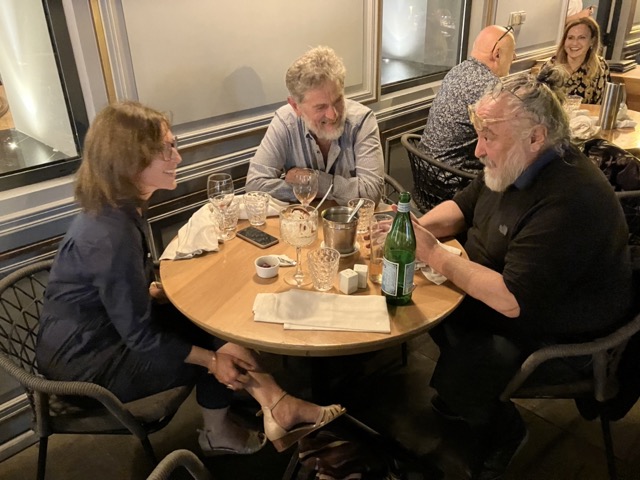
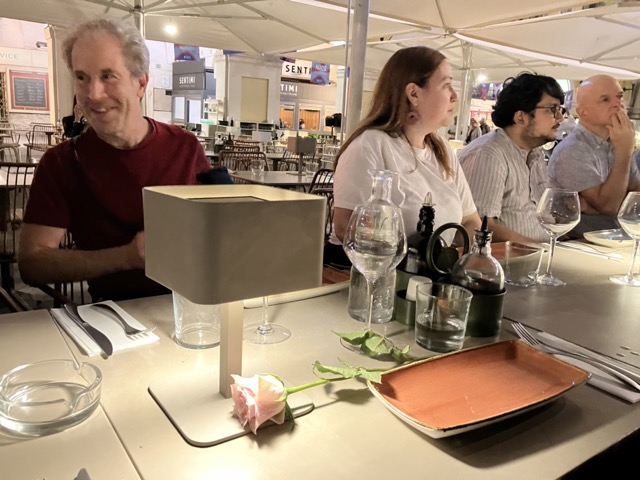
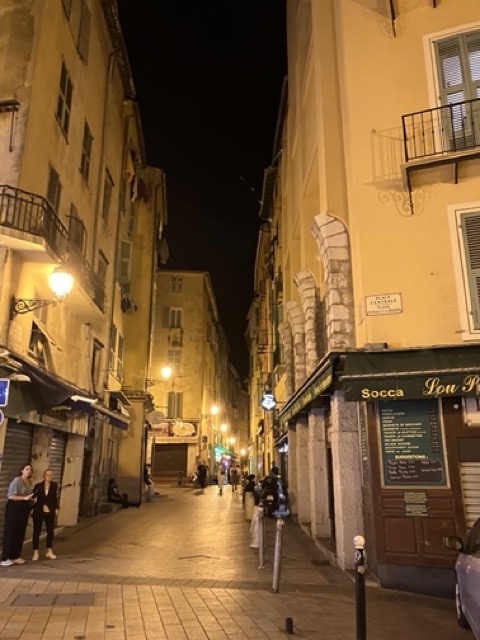
OASIS 3 was held jointly with Semantics and Philosophy in Europe 12 at the Université Côte d'Azur in October 2023.


Sponsors
Contact
The OASIS 4 organizers can be contacted at oasisyork4@gmail.com.